
Remote Passenger Crash Survival
If an aircraft goes down in a remote place, a few simple actions in the right order can make a major difference. The biggest early risks are fire and smoke, bleeding, exposure (cold, heat, wind, rain), and poor decisions in the first hour.
Aim: stay alive, stay together, and be found as quickly as possible.
Core principle
Unless staying put is clearly unsafe, stay with the aircraft.
Rescuers usually search for the wreckage first. Remain nearby, make yourself visible, activate any beacons, and conserve energy.
At-a-glance priorities (first hour)
| Time window | Focus | Outcome |
|---|---|---|
| 0–2 minutes | Fire, smoke, safe evacuation | Everyone alive and together |
| 2–30 minutes | Bleeding, breathing, shock, exposure | Stabilise injuries and prevent deterioration |
| 30–60 minutes | Signalling, shelter, water | Become easy to locate and sustain decision-making |
Phase 0, pre-flight safety boost
Remote charter flying can involve short runways, rough weather, limited alternates, and long waits if plans change. A few small habits reduce risk.
Carry on your person (not in checked baggage)
- Water and a high-energy snack
- Critical medication
- A light layer (wind and shock can chill you fast, even in warm climates)
- Torch or headlamp (if you often travel remote)
- Small power bank (optional)
If you travel remote often
Consider a personal locator beacon (PLB). Learn how to use it, keep it accessible, avoid accidental activation, and register it where required.
Take the safety briefing seriously
Know where the exits are, how your seatbelt works, and what the crew wants you to do after the aircraft stops.
Phase 1, when you realise ‘this is happening’
Brace properly
- Get into the brace position as directed
- Keep your seatbelt low and tight across your hips
- Stow loose items quickly, unsecured items become projectiles
- Stay belted until the aircraft has fully stopped moving
Immediate post-stop threats
- Fire and smoke
- Secondary hazards (rolling, collapsing cabin, sharp debris)
- Panic and congestion at exits
Phase 2, the first 2 minutes
Move quickly, but stay together.
Decision box: ‘Is it safe to stay inside?’
Leave immediately if you smell strong fuel, see smoke, or hear crackling.
Stay belted until the aircraft has fully stopped, then evacuate decisively.
1) Assess breathing and fire risk
If you smell strong fuel, see smoke, or hear crackling, evacuate.
- Move upwind if possible
- Get clear of the aircraft
2) Stop at a safe distance
Move far enough to be safe, then stop and regroup. Avoid scattering.
3) Headcount and simple tasking
Use short, clear instructions:
- ‘Everyone who can walk, over here’
- ‘Stay together’
- ‘Bring first aid and water’
- ‘Find the beacon and survival kit’
Phase 3, the first 30 minutes
Priorities (in order)
- Immediate danger (fire, smoke, fuel, unstable wreckage)
- First aid
- Shelter and exposure control
- Signalling and communication
First aid focus
Bleeding first. Breathing second. Shock always.
In remote settings, basic first aid buys time.
1) First aid
- Major bleeding: direct pressure, keep pressure on, improvise with clothing
- Breathing issues: keep upright, calm, monitored
- Shock: keep warm, lay flat if safe, reassure, small sips of water if fully conscious and not vomiting
- Spinal concern: do not move people unless there is danger (fire, flooding)
2) Control exposure early
- Get out of wet clothes if possible
- Get people off the ground (insulate from below)
- Create a windbreak using anything available
- In heat, make shade immediately and cover skin
3) Activate signalling
Start with the strongest signals available:
- Aircraft beacon (if present and operating)
- PLB (if available)
- High-contrast visual markers on open ground, ‘X’ or ‘SOS’ using rocks, branches, fabric
- Reflective signalling when aircraft are heard or seen (mirror, phone screen)
- Smoke by day, fire by night, only if safe and controlled
Phase 4, the first day, set up a rescue camp
1) Stay or move
Default is to stay with the aircraft unless it is unsafe (fire risk, flooding, unstable terrain, active hazard).
Only consider moving if:
- Staying put is clearly dangerous, or
- You have confirmed communication and a known, close route to help, and you are physically capable
If you move, leave a note
Names
Time you left
Direction
Reason
Planned destination
2) Build shelter
Use the aircraft and debris as resources:
- Seats and panels as windbreaks
- Upholstery as insulation
- Floor mats as ground insulation
- Doors or structures for shade
3) Water
- Use carried water first
- Collect rainwater if possible
- Treat natural water if you can (boil, filter, purification tablets)
Avoid:
- Rationing water to the point of confusion and collapse, drink small amounts regularly
- Alcohol
- Seawater
4) Fire
- Only light a fire when well clear of fuel smells and spills
- Keep it controlled, clear the area
- Have a plan to extinguish it
- Avoid any fire that could become a bushfire
5) Food
In the first 24 to 48 hours, prioritise warmth, hydration, shelter, and signalling. Avoid unnecessary foraging.
Phase 5, nights and morale
Routine (repeat every few hours)
Injuries check
Water check
Signal check
Shelter check
- Keep people together
- Keep a fire only if safe and needed
- Rest whenever possible
- Listen for aircraft and be ready to signal quickly
Special situations
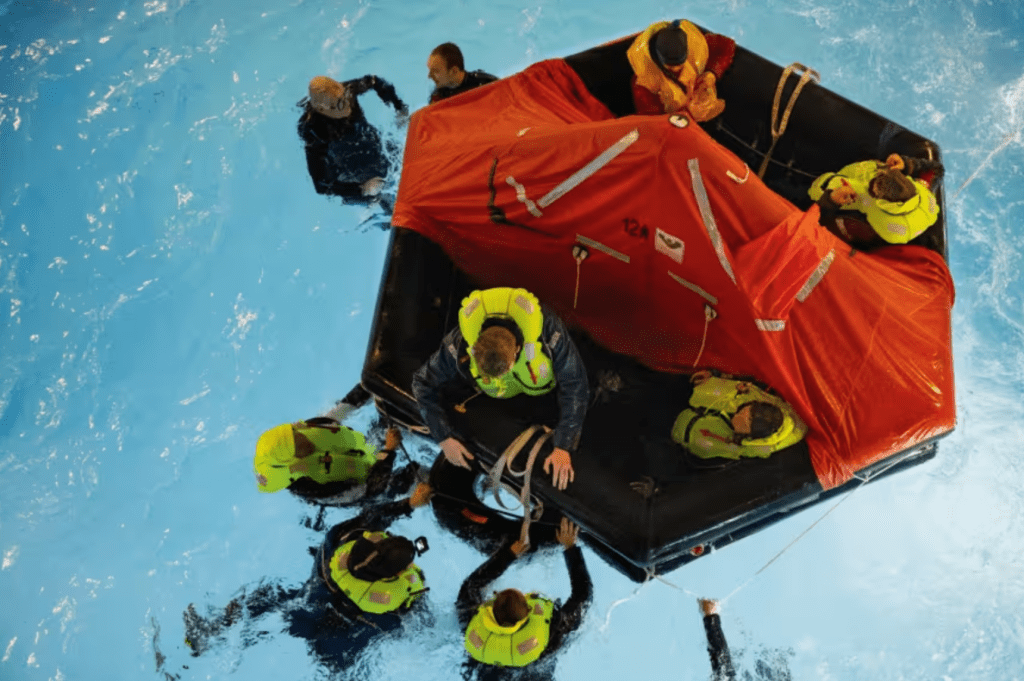
Water ditching
- Exit calmly, do not inflate a lifejacket until clear of the aircraft
- Stay with the group
- Use a raft if available
- Protect from cold and sun
- Keep signalling continuously
Fire or leaking fuel
- Evacuate immediately
- Move upwind
- Regroup at a safe distance
- Treat injuries, then signal
Extreme heat
- Shade first, then water management
- Cover skin, rest during peak heat
- Avoid unnecessary walking
Cold, wet, windy
- Insulate from the ground, block wind, get dry
- Keep people together
- Treat shivering and confusion as serious warning signs
Quick checklist
Immediate
- Brace, seatbelt tight, protect your head
- Assess fire and smoke
- Evacuate if unsafe, move upwind, regroup
Stabilise
- Headcount, control bleeding, treat shock
- Control exposure early
- Activate beacon, then create visible signals
Sustain
- Do not move away unless staying put is unsafe
- Build shelter early
- Drink small amounts regularly, conserve energy, stay together
 Jellywire Aviation